
South Plainfield Street Directory Workflow
Use one South Plainfield address at a time. First, verify its mailing form through the USPS ZIP Lookup. Then search the state parcel tools with the normalized address, county, municipality, block, and lot. Save the parcel identifiers before opening a deed search. This South Plainfield street directory sequence is more reliable than a loose name search because the parcel stays tied to the location even when a name is common, a transfer is recent, or an older instrument uses a rural description.
- Enter the South Plainfield street address, city, and state in USPS and retain the returned form.
- Use the NJGIN parcel and Property Explorer route to match the address to South Plainfield, block, lot, and PIN or parcel ID.
- Compare the parcel with the state property display or request the local property record card from the South Plainfield Tax Assessor.
- Search the Middlesex index by lot/block, parcel, or the recorded owner, then retain the instrument number or book/page.
- For a historical household question, test the street and verified surname in the regional directory and archive collections.
Each result answers a different question. A parcel identifies land, an assessment connects the land to a dated tax record, and a deed records a title transfer. None alone proves that every person connected with an address lived there. Note: Record the search date because annual assessment data and online index coverage can change.
South Plainfield Street Directory Address Fields
Postal, municipal, tax, and deed records do not use an address in the same way. USPS controls delivery formatting. South Plainfield maintains its municipal records. The South Plainfield assessor maintains annual tax information, while the Clerk indexes legal instruments. A situs address means the physical parcel. A mailing address is where notices go and can point to a post-office box, representative, trust, or another property. Keep those fields distinct when working through a South Plainfield street directory.
| Field | Search status | How it helps |
|---|---|---|
| Street address | Address field in NJGIN and USPS | Finds the situs parcel and postal form |
| County and municipality | NJGIN selectors | Separates South Plainfield from another postal or historical label |
| Block and lot | Parcel identifiers | Links the assessment, GIS view, and Clerk index |
| PIN or parcel ID | State and county cross-reference | Bridges map and recorded-instrument searches |
| ZIP | USPS uses address, city, and state | Verifies delivery geography; it is not a deed-search field |
| Map number | Middlesex index field | Supports a legal-map or parcel connection |
The state property transparency display may show a South Plainfield location, owner where public, block/lot, annual land and building values, classification, prior-year taxes, and exemption flags. It is an annual snapshot. Ownership changes after certification may not yet appear, so a recent South Plainfield deed and an assessment screen can disagree without either record being false.
South Plainfield Parcel Mapping in NJGIN
The state parcel map gives a South Plainfield street directory its geographic frame. Search the known address, keep the street name and parcel boundaries in view, and copy the selected block, lot, and parcel identifier. The map can show adjoining parcels and context layers, but its polygons are for mapping and analysis, not a legal boundary survey. Middlesex County confirms that it maintains GIS applications, web maps, and open-data resources, although the inspected county page did not expose a named South Plainfield owner-search viewer.
The NJGIN parcel-data page is the public statewide fallback. If a name is redacted under Daniel’s Law, preserve the redaction as the result. Use block, lot, legal description, or an address-specific request rather than trying to rebuild protected information from other sources.
South Plainfield assessor information identifies the local assessment function and contact route.
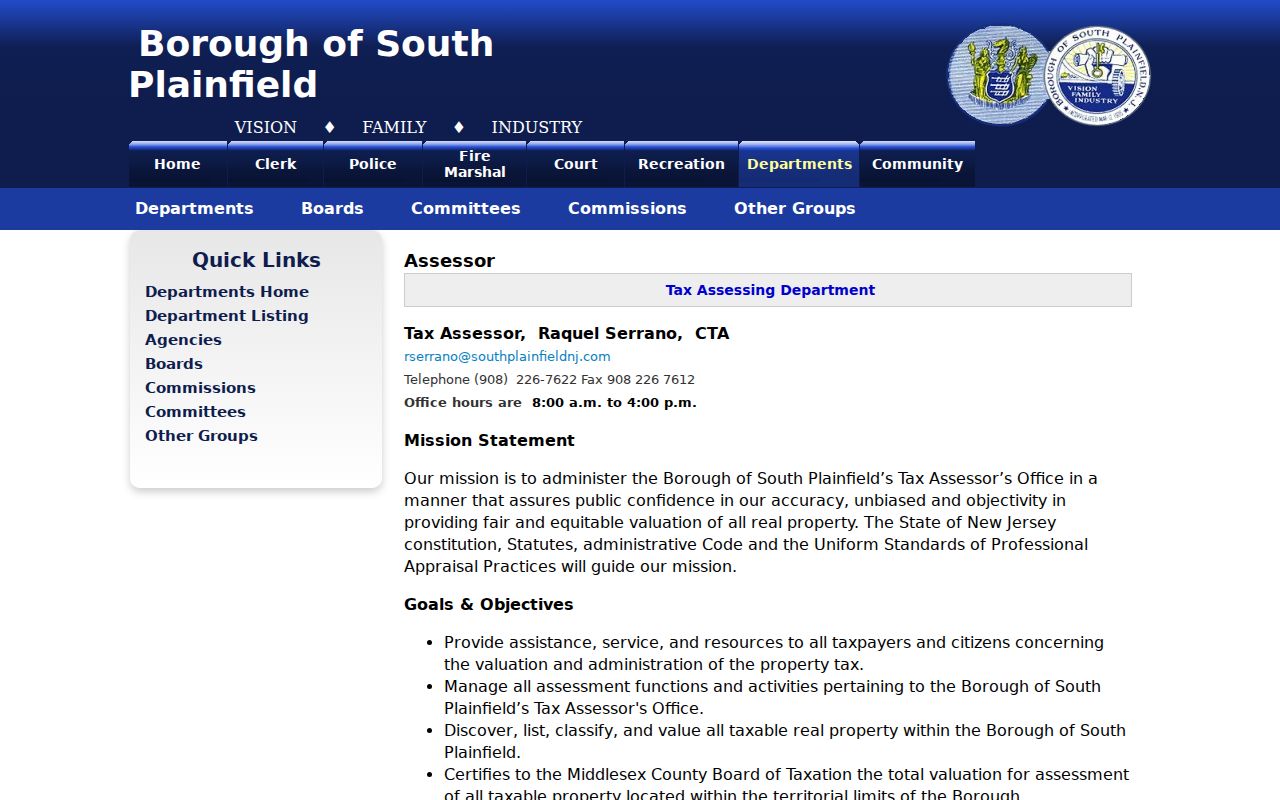
The assessor material belongs after the map step: it helps confirm the parcel fields and assessment context, not a full household list.
South Plainfield Street Directory Deed Search
Once the South Plainfield parcel is stable, use Middlesex County Records Search or its alternate public interface. The system offers standard searches by document type, party name, town, consideration amount, and date range. It also provides instrument-number, book/page/type, lot/block, map-number, district/map/submap/parcel, and parcel-ID paths. Enter an individual party as Last-Name First-Name without a comma, choose the town, and use MM/DD/YYYY dates when narrowing a result.
For a South Plainfield street-wide check, lot/block and parcel modes are usually safer than a broad party-name search. A result row is an index lead. The system marks records with a status other than V or B as not verified and directs an asterisked row to View for details. Capture the municipality, parties, document type, recording date, legal description, instrument number, book/page, block/lot or map number, and status before treating a row as a transfer.
The Middlesex grantor-grantee and parcel interface is useful when a street address is missing from the index but the property identifiers are known.
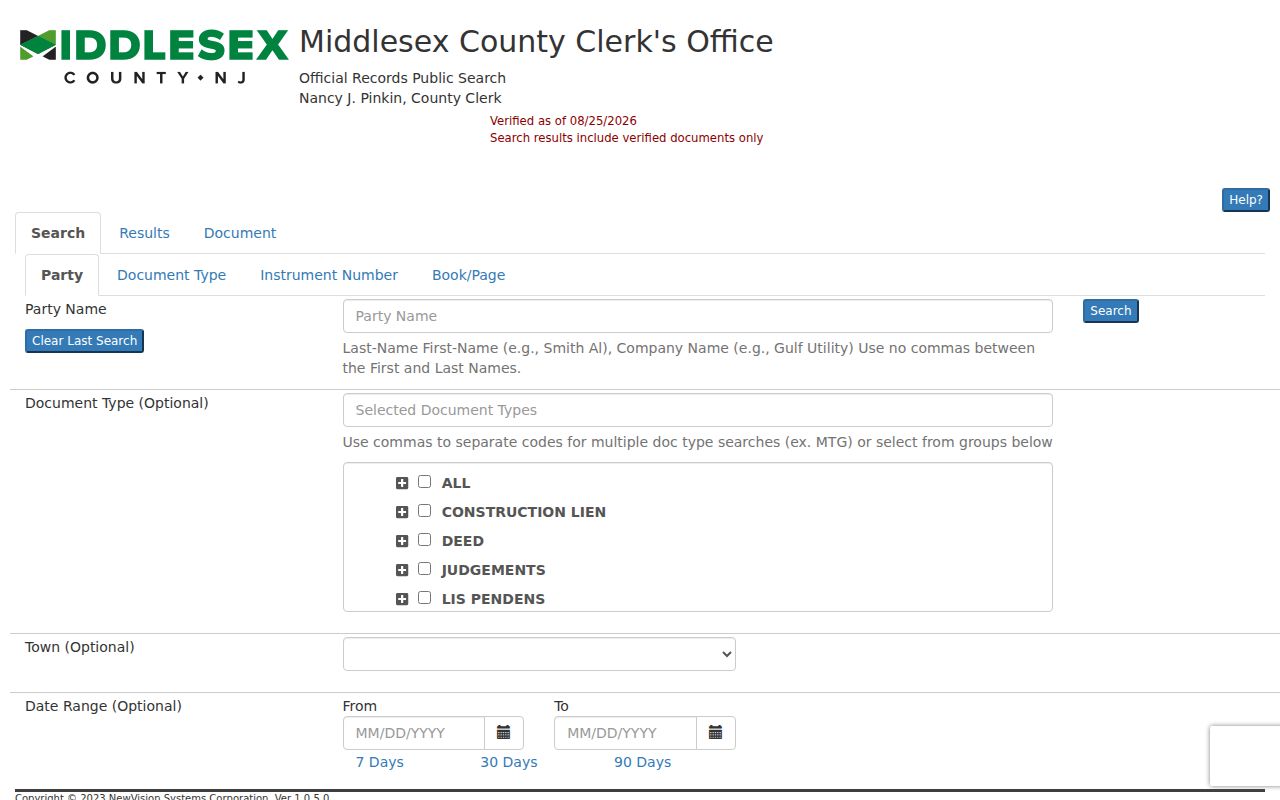
The separate search modes let a block, lot, map number, or parcel ID hold the place when an owner name has changed or appears in more than one form.
The County Records Search coverage page identifies the online record categories before a search begins.
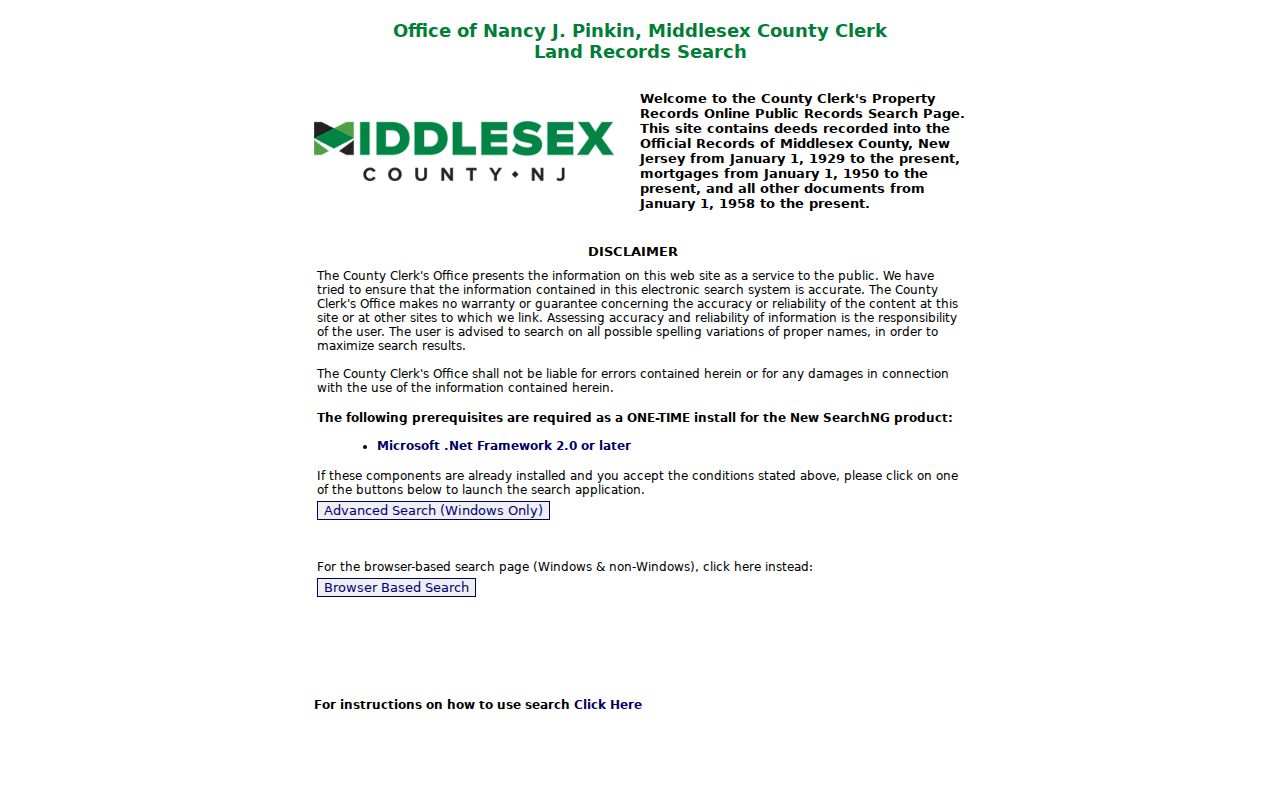
Use the displayed coverage at the time of the search, then save the instrument reference for any image or official-copy request.
South Plainfield Street Directory Record Chain
South Plainfield address-keyed sources work together, but they are not interchangeable. The property record and map establish which parcel is being discussed. The deed index follows title transfers. A voter record can only confirm a limited registration match, and municipal permit files can document an address-specific project or application. The following chain keeps the source limitations visible.
| Address record | South Plainfield keeper or route | Useful fields | Access path |
|---|---|---|---|
| Assessment/property card | South Plainfield Tax Assessor; state property display | Situs, public owner field, mailing address, block/lot, values | State view or local card request |
| Parcel map | NJGIN and Middlesex GIS | Parcel shape, identifiers, road context, adjoining parcels | Public map, subject to mapping limits |
| Recorded instruments | Middlesex County Clerk | Parties, legal description, dates, book/page, status | Free index; detail, image, or copy may be separate |
| Registration record | New Jersey elections route | Limited name, month/year, status, city, and county match | Public check or lawful statutory list request |
| Permit or code file | Borough department and Clerk | Application, approval, inspection, violation, or certificate | Address-specific request; no indexed portal located |
A parcel number joins the tax, map, deed, and permit trail. A street name alone does not. The simple voter check is not a public street roster, and the County index does not expose a ZIP filter. That is why a South Plainfield street directory should keep one address and its parcel identifiers together instead of attempting to assemble an unbounded list of names.
Middlesex Deed Coverage Conflict
For an older South Plainfield street directory trail, do not treat the online cutoff as one settled date. The current County Records Search text says deeds begin January 1, 1929. A 2022 county digitization announcement says public deeds reached back to 1923, and the Clerk reports that deeds and mortgages dating from 1683 are on file. The apparent 1923 to 1929 conflict is a verification task, not permission to assume that every deed in those years is online.
Save the coverage language shown on the search date and ask the Middlesex County Clerk which book, index, image, or Public Search Room route applies. Older fragile books can require in-person research. Mark results separately as online index checked, office or microfilm needed, and unresolved. That distinction keeps an address chain honest when a parcel spans the web-index boundary.
South Plainfield Address Record Requests
No official South Plainfield address-search permit or code-case portal was located in the reviewed materials. The practical fallback is the borough forms directory, which links building, zoning, tax, and Clerk materials, including the local OPRA route. Ask for an existing record, not a custom street roster. Give the street address, block and lot if known, file number if known, date range, and the precise record type sought.
Separate applications, approvals, inspection results, violations, and certificates in the request. That lets the custodian locate an existing file and preserves the limits of the record. A permit can identify an applicant, owner, contractor, work description, alteration date, or file number. It does not establish who occupied the property. Written OPRA requests must reasonably identify the records held by the agency, and agencies do not have to create new research or answer broad questions.
The Borough permit and OPRA forms page is the appropriate starting point when an online address index is unavailable.
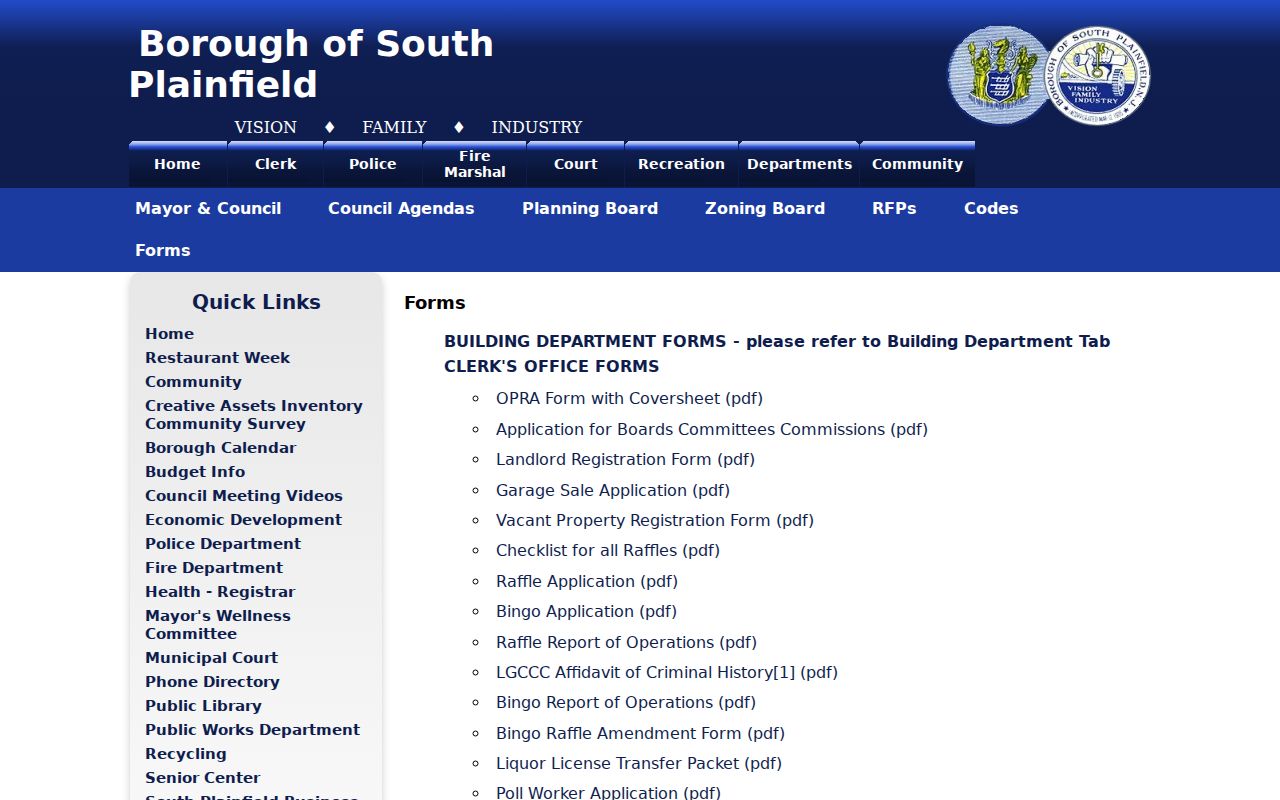
The forms support a narrow, address-specific request to the department that holds the file rather than a request for a personal roster.
South Plainfield Street Directory Voter Limits
The New Jersey registration check asks for first name, last name, and date-of-birth month and year. A public match may show a name, limited birth information, registration effective date, status, city, county, and voter ID. It is designed to check a person’s registration, not to provide every name on a street. A no-match can reflect spelling, hyphenation, a middle initial, former name, or a different city/county form.
New Jersey law controls the fuller voter file. Printed registry lists and electronic copies have statutory request paths, fees, and redactions, while signatures, protected addresses, and security-sensitive identifiers remain unavailable. Do not use voter material for solicitation or to compile a household list. If a record is needed for a legitimate civic or family-history question, identify the election district and ask the county office for the current procedure and lawful format.
South Plainfield Streets Before 1926
Historic-address work needs a different search vocabulary. Before South Plainfield became a borough in 1926, the area was part of Piscataway Township and was described through New Brooklyn and Samptown. An older deed, map, newspaper, or directory may therefore use Piscataway, Brooklyn, New Brooklyn, Samptown, a county description, or a former legal description instead of the current borough name.
Search the exact street wording and then try forms without suffixes or directionals. Record route names, tract descriptions, and the old place label exactly as found. The local road ordinance supplies useful cross-check terms such as Hamilton/Plainfield, Clinton, New Brunswick, New Durham, Park, Oak Tree, Stelton, South Clinton, and West 7th. These are search terms, not proof that a modern segment and an older mention are the same place.
For older address clues, the staff-assisted Plainfield library materials and the searchable South Plainfield Digifind-It archive can add newspapers, maps, and scrapbooks. The historical volumes are handled in more detail in the South Plainfield Directory Book.
South Plainfield Street Directory Terms
Four terms help keep an address search precise. Use them as labels in notes and requests so that a later result can be checked against the same parcel rather than only the same street text.
- Parcel
- A defined piece of land in the tax and map system, usually linked to block, lot, or parcel-ID fields.
- Situs address
- The physical location of the parcel. It differs from the mailing address used for tax notices.
- Legal description
- The recorded land description in a deed or map. It can preserve continuity when a street address changes.
- Plat or map
- A recorded map that can show lot, block, subdivision, or tract relationships. It is not a substitute for a legal survey.
- Criss-cross directory
- An address-arranged directory that can place a dated name at an address, subject to the collection’s geographic coverage.
South Plainfield Street Directory Limits
A street search cannot produce a complete household roster. The assessment record can name an owner where public, but it does not establish occupancy. A deed tracks title, not daily residence. Utility customer lists are not public resident directories, and DMV address information is restricted by the federal Driver’s Privacy Protection Act. A map can show adjoining parcels, not every person associated with them.
Protected-address rules matter as well. Daniel’s Law can redact owner information, and New Jersey’s Address Confidentiality Program uses substitute addresses for qualifying people. Respect a redaction or substitute address as an access result. Do not use a street directory to pursue, monitor, threaten, or contact a living person.
Lawful use. South Plainfield address records support personal research, property history, and civic transparency. New Jersey stalking and harassment laws still apply to the way any record is used.